Each chapter of this book has been a portal into spaces in which captions and subtitles become the embodiment of accessible multimodal communication. We have examined different media, videos, and conversations that affirm the vitality of captions and subtitles and access in our cultures. Although we have now reached the last chapter of this book, this is not the ending of our journey.
I have certainly not reviewed every single video and conversation about captions and subtitles in this book, and I have not included the legions of accessibility activists, scholars, students, and everyday citizens who advocate for captions and subtitles online and offline. Rather, this book is an extension of advocates’ and creators’ ongoing work to support access and an ongoing celebration of the power of captions and subtitles as instruments of connection. Readers are invited to build on this book and visualize captions and subtitles—in all their forms, including open and closed captions and subtitles—as essential features of our videos and conversations. That message is embodied in my Introduction video (Figures 8.1 and 8.2).
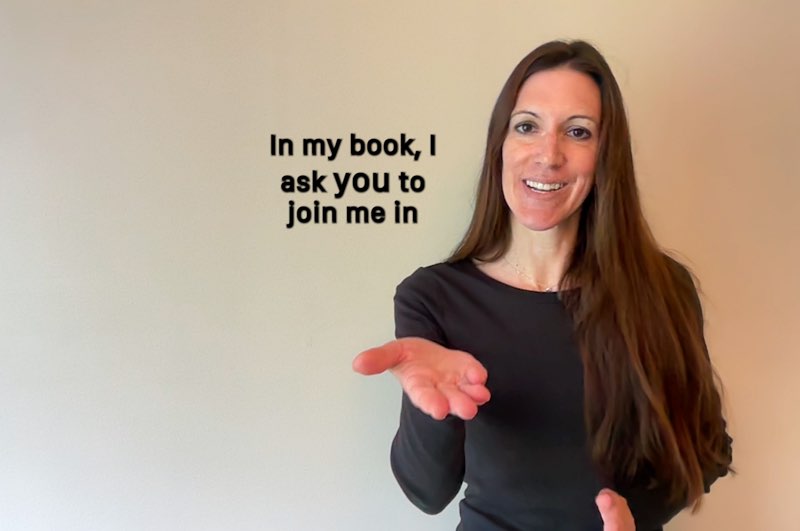
Figure 8.1: Embodying a message through integral subtitles
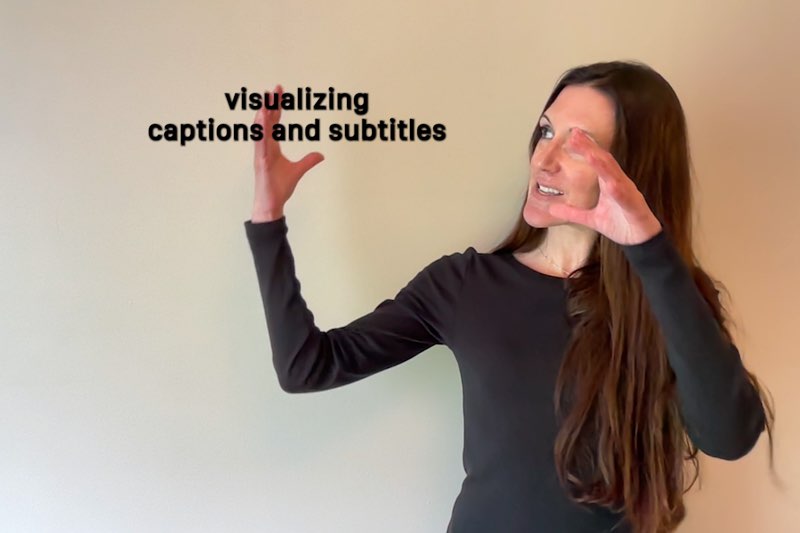
Figure 8.2: Embodying a message through integral subtitles
COMPOSING THE SELF
This book would not be complete without my own creation of videos in which I present my multimodal and multilingual argument to audiences through integral subtitles. By incorporating a short video of mine into each chapter of this book, I aimed to show my audiences my embodiment and to show video creators my message about the value of designing a space for captions and subtitles of different types in video analysis and design processes. Within each chapter, I used alphabetic text to highlight key features of the chapter’s video, including to reinforce how we can capitalize on the affordances of words on screen and to demonstrate how creators could meaningfully include captions and subtitles in video creation processes.
It has been helpful to reflect on the process of creating my videos to show readers how captions and subtitles can be central in video composition processes. So that we can further visualize captions and subtitles as the embodiment of accessible multimodal communication, I will now share my process of creating my videos for this book. My purpose here is to emphasize the human factor in designing captions and subtitles since each one of us is a human creator who has a unique identity, linguistic and cultural background, and purpose for connecting with our audiences. As humans, we can work through our limitations and share our commitment to always learning through the process of making our messages more accessible, and I do that here.
By creating (Deaf) space for subtitles, I honor my languages and cultures, including Deaf culture, and allow for ASL and English—written and spoken—to interact in the same video space. Most crucially for this book, I have integrated subtitles in the space next to me to embody the value of making this book’s message accessible through multiple modes and languages in interaction. The subtitles are integral to my message; without them, I might not fully express the points I make, as shown in the following screen capture of my Chapter 6 video (Figure 8.3).
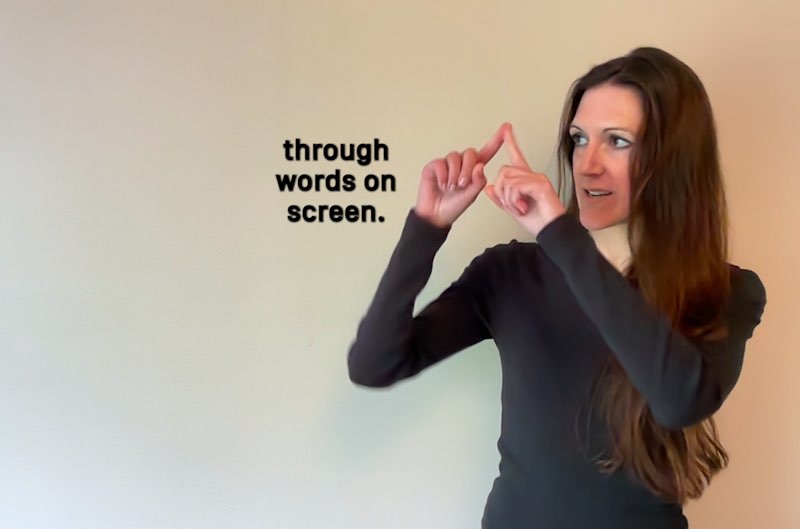
Figure 8.3: Paying attention to words on screen
Lest I erroneously seem like I am arguing that every single creator should integrate captions or subtitles in the space next to them, I want to clarify: every creator and context is different, and we all have many options for how we can make captions and subtitles and access central in our videos and conversations. Each approach presents its own challenges and benefits, and we must always be open to exploring new practices for connecting with our audiences through multiple modes of access and communication.
My creation of videos reflects the embodied multimodal approach and its six points: I have designed space for subtitles during the entire video composition, recording, and editing process. With my subtitles, I provide multiple modes of access to the meaning of my video. The subtitles support audiences’ experiences of my embodied rhetorics, or the meaning that I express through my signs, body language, and facial expressions. They support the interdependent nature of multimodal and multilingual communication and the interconnection of modes, languages, and meaning. They reasonably enhance the rhetorical and aesthetic qualities of the video. They show my awareness of how different audiences—including signers and non-signers—would engage with and access the composition in different ways.
Now, as shown in the following Chapter 1 video capture (Figure 8.4), let’s begin with space.
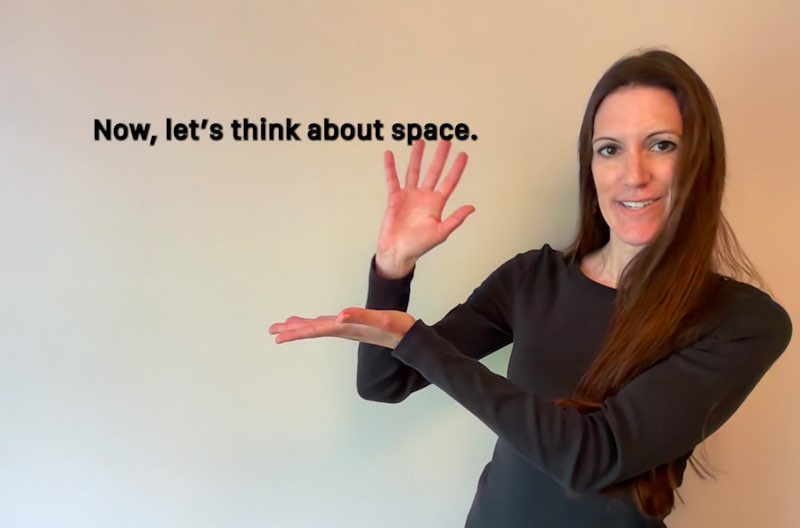
Figure 8.4: Thinking purposefully about space
Committed to creating my own videos, I designed a space for subtitles throughout the entire video composition process, beginning with the development of my scripts for each chapter. As I worked on my scripts, I visualized how I would appear on screen with space next to me for subtitles. For each video, I recorded myself signing with full awareness of how I would later add subtitles in the space next to me. That included ensuring that the camera framed me appropriately with space next to me. Knowing that black font would be the most effective and readable color for my subtitles, I chose a light-colored background. I also kept in mind how I would later incorporate voice-over audio created by an interpreter, and I paced my signs accordingly for both ASL and spoken English.
As a right-handed person, I positioned myself mainly on the right side of the camera; that allowed me to use my dominant hand to interact with the subtitles that would appear in the space next to me. When I felt that it would be rhetorically effective to move myself and the subtitles, I moved to the center of the screen or the left side, as in the following screen captures of my Chapter 2 video (Figures 8.5 and 8.6)
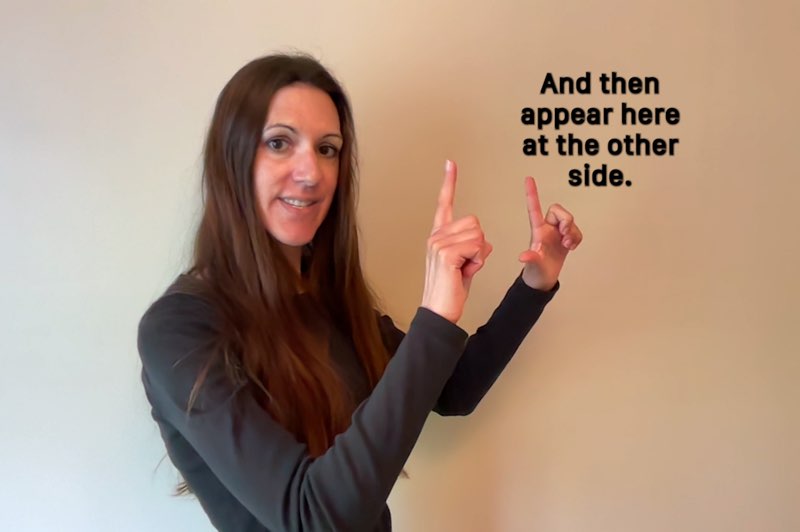
Figure 8.5: Interaction with subtitles in different areas of the screen
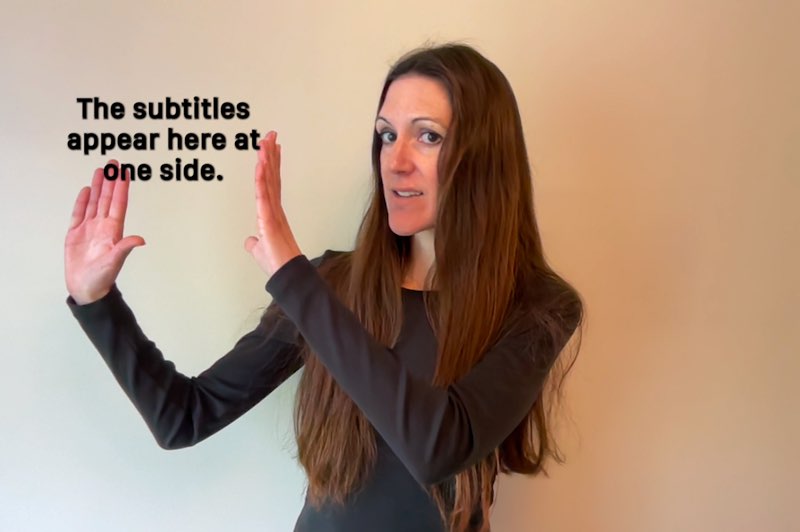
Figure 8.6: Interaction with subtitles in different areas of the screen
Elsewhere, when I discussed conventional subtitles that appear at the bottom of the screen, I moved myself to the center of the frame and placed the subtitles at the bottom of the screen. In these cases, I planned to change the color of the subtitles to white to embody the traditional color for captions/subtitles and to make them readable when they appeared in front of me.
After recording each video, I used Adobe Premiere Pro to embed subtitles into the space next to me. Affordances of this program include being able to edit the design of captions (subtitles), including the placement, color, font, and size of words that appear on screen. In response to my academic context, I decided on a straightforward design for the subtitles: mainly black font. That design would allow me to present my message professionally while still interacting purposefully with the subtitles, as reflected in in the following screen capture of my Introduction video (Figure 8.7).
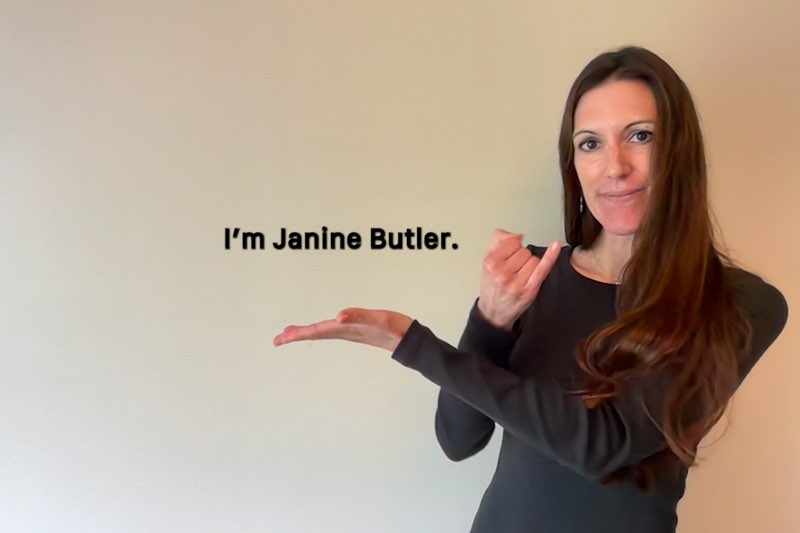
Figure 8.7: A professional and purposeful introduction
I also intended for my subtitles to reflect the guidelines for quality captions (DCMP, 2023b), including ensuring that the subtitles are readable. Readability includes ensuring that subtitles appear on screen long enough to be completely read by viewers with different reading speeds. To support the consistency, clarity, and readability of my subtitles, I consciously ensured that enough words appeared on screen at the same time.
In other, less formal contexts, I could shorten the number of words that appear on screen and experiment with having single words and phrases pop on and off quickly and in different colors. If I wanted more stylized words on screen, I would switch to another program that affords more experimentation with movement of text on screen. This was not the context for highly stylized or colorful words on screen around me, but I could interact with the subtitles, as shown in the following screen capture of my Chapter 1 video (Figure 8.8).
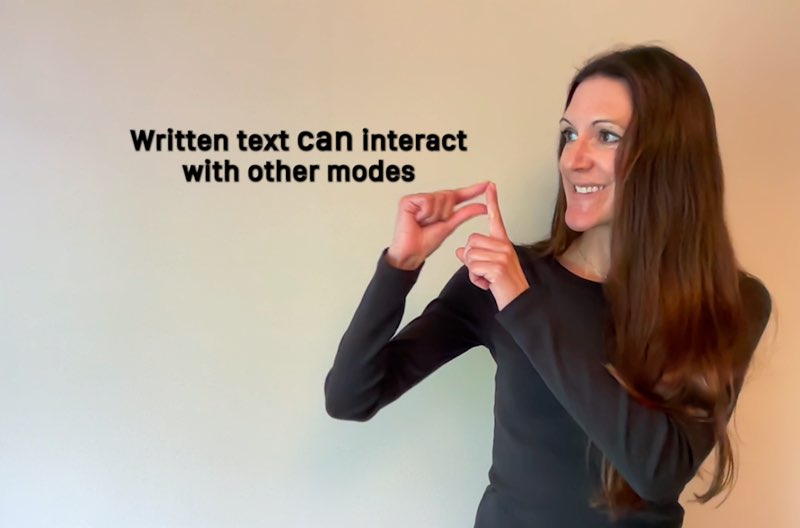
Figure 8.8: Multimodal interaction on screen
By including more words on screen and in the relatively same location next to me in a relatively consistent design, I also intended to replicate two benefits of traditional captions that appear at the bottom of the screen. Traditional captions are effective in accommodating a relatively large number of words along the bottom of the screen from the left side to the right side—and viewers know the words will appear in the same space and are prepared to read fast and ahead. Viewers of my videos could likewise attend to the same relative space and read my signs and the written words next to each other.
This is an ideal point to discuss a few related limitations of integrating subtitles, starting with the time and effort required to dedicate ourselves to embedding subtitles permanently into the space of a video. We can create videos with voice-over audio, and then use video editing programs or YouTube to automatically generate captions; those captions would be synchronized to the audio, and we could clean up the captions to ensure accuracy. When embedding subtitles into the space of a video, as I did, we must dedicate more time to the rhetorical and aesthetic process of considering how (and where) best to create each subtitled moment and line in a video.
In my case, the subtitling process was naturally lengthened by my incorporation of voice-over by an ASL interpreter who read my subtitles out loud. I then aligned the audio with the subtitles while accepting that spoken English and ASL—as two different languages that take place in different modalities—might not always be temporally synchronized word-for-word. Of course, not all creators will permanently embed captions and subtitles into a video, and other creators will have different aspects to consider that will lengthen or shorten their composition processes.
To make my content accessible across multiple modes and languages, I also included traditional captions that could be turned on and off through YouTube. That way, viewers would have the option to read captions and subtitles at the bottom of the screen—and, with YouTube’s automatically generated translations, be able to choose different languages (although automatically generated translations might not be accurate). This counterbalances the limitations of embedding subtitles that viewers cannot change to their target language.
Most of all, we must continue to recognize one major limitation of captions and subtitles, which appear through the visual mode. I celebrate the increased incorporation of audio and visual description, which makes on-screen content more accessible. But commendation is not enough, and I must include myself in our collective effort toward increased accessibility across modes and senses.
These limitations are invitations for us all to consider the best ways to express our messages through captions and subtitles and other modes on screen. Your video composing process may be, or will be, different from my own, but we all have the same truth: we are all human rhetors, or creators, who can make deliberate decisions and work through challenges in making our own words accessible.
VISUALIZING MORE
To fully sense captions and subtitles as the embodiment of accessible multimodal communication in all its forms and varieties, I ask you to reflect on the curated collection of meaningful examples of captions and subtitles in this book. The embodied multimodal approach affirms how a variety of designs, styles, and practices for captioning and subtitling videos reflect and enrich our interdependence and our commitment to connecting with each other. Creators, characters, real individuals, and audiences discover and create strategies for communicating through multiple languages and modes in interaction. This drive for more accessible multimodal communication cannot end, and we can incorporate the analysis and design of captions and subtitles of all styles more deeply into our lives.
On a daily basis, we can be inspired by the accomplishments of professionally recorded media (Heroes Reborn, Sherlock), extraordinary collaborative efforts (Gallaudet: The Film), documentaries and television shows that spotlight differences as natural (Born This Way Presents: Deaf Out Loud, Crip Camp: A Disability Revolution, and The Company You Keep), spaces that prove the power of interdependence and learning to communicate (New Amsterdam), “silent episodes” and media that show the sensation of communicating through silence and feeling sound through the body (Only Murders in the Building, among others). Finally, we can join social media advocates, online video creators, and related conversations that make captions and subtitles and access central in our cultures (and there are happily too many to list in this limited parenthetical space). Let us, as I show in the following screen capture of my Chapter 1 video (Figure 8.9), continue to design space for captions and subtitles in our videos and conversations.
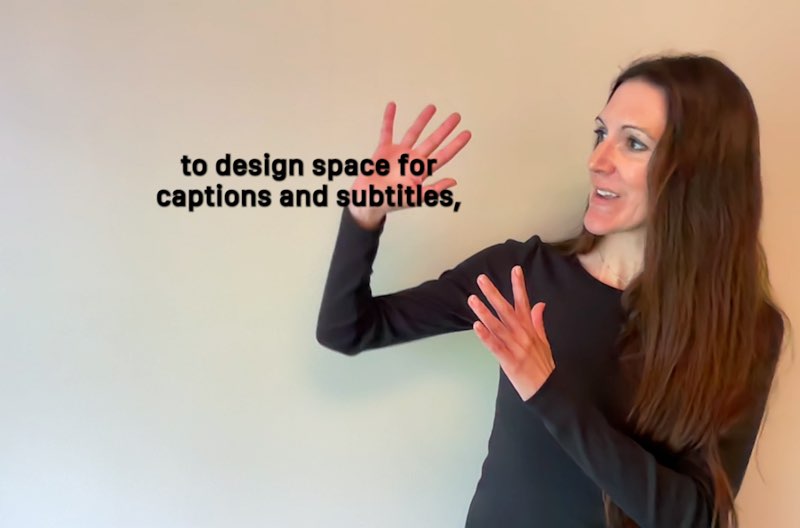
Figure 8.9: Designing space for captions and subtitles
There will continue to be many more instances. Imagine the many different ways that words appear on the screens in your life. Perhaps a character is reading a text message, and then the words that she’s focusing on become enlarged, leading you to focus on the exact same words as the character. And that makes her emotional state of mind even more accessible and felt within you. Maybe at another point, you’ll watch a video tutorial about how to solve a Rubik’s Cube and struggle to read the captions at the bottom of the screen at the very same second that the solver is rapidly rotating the cube. At that moment, you might realize how integrating color-coded captions in closer proximity to each rotation would strengthen your comprehension of the steps to take to accomplish each move. Consider the effectiveness of these practices and appreciate the connective strength of words in interaction with other modes.
ADVICE AND GUIDELINES FOR VIDEO CREATORS
To promote a more inclusive future for video composition, there are suggestions and guidelines that content creators, instructors, and students could use to apply an embodied multimodal approach when creating videos with captions and subtitles.
Persistent changes in technologies and rapid technical advances make it infeasible to present you with a concrete list of free video editing software programs and social media tools, but rest assured that video creators can explore available options for incorporating different styles of captions and subtitles when creating videos, from traditional closed captions to highly stylized integral captions and subtitles.
My earliest years of creatively integrating captions and subtitles as a student occurred exclusively with Windows Movie Maker, a free video editing program that went out of existence during the last decade. Since then, Adobe Premiere Pro has remained my primary software for integrating captions and subtitles, but there are an array of programs that you can explore and use to meet your needs and preferences.
These programs may have limitations and might not let you fully customize captions and subtitles in the ways that you want, such as changing the color or size, but use such limitations as a challenge: criticize the limitations of these programs, reflect on the importance of what you want to accomplish with your written text (for instance, what message are you trying to convey through changing the color or size of only one word?), and challenge yourself to explore the affordances of different programs and develop your captioning and subtitling skills.
As you become more comfortable with different programs or learn more about yourself as a composer of captions and subtitles, continue to critique the limitations and make informed rhetorical choices about your use and creation of captions and subtitles of different kinds. Most importantly, share your knowledge with others, including members of your online networks and students in your courses.
The following guidelines are grounded in the criteria of the embodied multimodal approach and can serve as a heuristic for promoting more inclusive video composition practices, particularly in academic and online spaces. These guidelines are further oriented to the future, a future in which we human creators may interact more frequently through social media and online technologies that include artificial intelligence (AI).
1. Design a Space for Captions and Subtitles and Multiple Modes of Access
Social media and AI both have had an accelerating effect on our communication practices, with video creation and content creation occurring at an ever-intensifying pace. In years past, more time was needed to create, caption/subtitle, revise, and share a video; that time does not exist now with content creators posting videos on a more frequent basis (even multiple times a day) and with AI’s potential in streamlining different aspects of production processes. These social and technological changes do not remove the crucial factor: that we are humans who have a message that we want to share and who can design a space for captions and subtitles and multiple modes of access in our videos.
While we might be able to more rapidly disseminate a video, here are some points that creators, instructors, and students should consider:
-
Design a space for captions and subtitles in each video.
- Content creators—especially those who record a substantial number of videos—can remind themselves to take the time to ensure that there will be space for captions to appear on screen in ways that can be read and understood by online audiences, including those viewing content on phones.
- Instructors can create instructional videos in which they design a space for captions and subtitles. These can include informal videos in which they introduce themselves to students before the first day of class, videos in which they teach new concepts and interact with key terms on screen next to them, or videos in which they pose and respond to questions that appear on screen.
-
Critique different programs and technologies and find more suitable options.
- If a program does not give content creators options for stylizing captions and subtitles in the ways that they want, they can create a video that demonstrates the limitations and advocate for better options.
- Instructors can develop class discussions, activities, and assignments that ask students to experiment with and discuss the affordances of different programs. Students can interrogate current and new options that are available for making meaning accessible across multiple modes, including sounds, visuals, and texts.
-
Appreciate our identities as human creators who want to connect with other humans through video composition, especially since these connections often rely on our own experiences, identities, and values.
- Content creators can contribute to online conversations that promote the importance of designing a space for captions and subtitles, including by reminding others of the possibilities for stylizing captions and subtitles in effective ways and by modeling their own effectively captioned and subtitled videos.
- Instructors can create their own captioned and subtitled videos that show students that they value access and connecting with others—which is crucial in human composition and communication.
2. Embodied Rhetorics and Multimodal, Multilingual Communication
Creating a video—especially one in which we record ourselves or are being recorded—is dramatically different from writing a text since we are presenting our physical selves on screen in addition to our argumentative voice or our message. With our physical bodies appearing on screen, we have the unique opportunity to more fully convey our embodied rhetorics and our use of multimodal communication—including multiple languages that may be spoken in the video. To capitalize even more deeply on the affordances of the medium, we can interact more directly with captions and subtitles and use them to highlight the power of our embodied rhetorics and multilingual practices.
With attention to embodied rhetorics and multilingual communication, here are some guidelines for content creators, instructors, and students.
-
Share your identity through your choice of captioning and subtitling designs and interactions.
-
Content creators, instructors, and students can use captioning and subtitling tools with different social media platforms and video editing programs to highlight their own embodied rhetorics and experiences. Instructors can model these approaches to students and ask students to create discussion board posts and projects that use captions and subtitles to embody their unique experiences.
- For example, someone could choose only a few words to place right next to them and use their hands or body to emphasize these particular words, whether by holding on to these words with their hands, moving the words from one part of the screen to another, or another approach that comes to mind.
- Someone else could use their voice, their facial expressions, or their eyes to emphasize those words without moving their bodies. By taking your own approach to interacting with captions, you could show—through the captions and subtitles—how you communicate and interact with meaning and the world around you. Showing your unique self would embody the human nature of communication and connecting across differences—including with and through written text.
-
Content creators, instructors, and students can use captioning and subtitling tools with different social media platforms and video editing programs to highlight their own embodied rhetorics and experiences. Instructors can model these approaches to students and ask students to create discussion board posts and projects that use captions and subtitles to embody their unique experiences.
-
Honor your languages through captions and subtitles.
-
Content creators, instructors, and students can show how they communicate fluidly through multiple languages by creating videos with captions and subtitles in different languages, including and beyond English. Instructors can attend to multilingual experiences when developing assignments, such as interview-based projects in which students interview a community member or research-based projects in which students build on primary and secondary research in several languages.
- For example, someone could create their own multilingual video in which they speak in their language(s) as well as English—and create different captions and subtitles for these languages. They could choose to use different colors or design schemes for different languages and show the value of multilingual communication in our world. Students could create group projects in which they bring together their languages and create a multilingual dialogue that becomes accessible through captions and subtitles. In such ways, captions and subtitles can highlight multilingual communication while making the message accessible to audiences who use different languages.
-
Content creators, instructors, and students can show how they communicate fluidly through multiple languages by creating videos with captions and subtitles in different languages, including and beyond English. Instructors can attend to multilingual experiences when developing assignments, such as interview-based projects in which students interview a community member or research-based projects in which students build on primary and secondary research in several languages.
3. Rhetorical and Aesthetic Principles and Audience Awareness
In English and other languages, the rise of AI has brought with it a rise in automatically-generated captions and improvements in the accuracy of these automatically-generated captions—and these factors will certainly continue to increase in the years to come. But we cannot forget about human creativity and our desire to share our own unique identities and perspectives with our audiences. We will hopefully always seek out innovative ways to share our messages with each other as we balance rhetorical principles for making messages clear and aesthetic design principles—and as we remain aware of how different audiences may be engaging with our content.
To honor the human experience of creating videos for audiences with rhetorical and aesthetic principles in mind, content creators, instructors, and students can consider the following guidelines.
-
Make your captions or subtitles as traditional or as unconventional as you wish, depending on your purpose, context, and audience—as long as they are accessible and you show awareness of how your audience may engage with your work.
- Content creators and instructors can assess their own videos to ensure that the captions and subtitles maintain the balance between accessibility and aesthetics.
- Instructors can ask students to review each other’s video drafts and provide constructive feedback on the design of their peers’ captions and subtitles. This provides students with time to reflect on their design, how audiences may or may not access their work, and finalize their captions and subtitles. This peer review process embodies the interdependent process of working together and advocating for accessible multimodal communication.
-
Celebrate the rhetorical, aesthetic, and accessible qualities of written text on screen.
- Content creators, instructors, and students can always be reminded that access is a shared responsibility and a meaningful opportunity for us all to interact in multilayered and creative ways with our screens and our modes of communication as we connect with each other. Through our videos and discussions, we can celebrate the new experiences we gain when we design a space for captions and subtitles.
JUXTAPOSITION: OPEN UP MORE SPACES
The principles of the embodied multimodal approach have guided this book’s study of the analysis and design of captioned and subtitled media and culminated in this final chapter’s recommendations for creators. One moment in my video for this conclusion chapter embodies my overall message to readers and my request for greater incorporation of captions and subtitles in our analysis and design processes. I now invite you to play this final video and to reflect on the value of integrating captions and subtitles into our rhetorical and creative processes.
In this segment, integral subtitles and my embodiment—including my signs and my facial expressions—become a unified rhetorical message as I pointedly gesture to the subtitles and use my physical expressions to appeal to my audience. I call on creators to make captions central in video composition processes, and I emphasize “central” in my signs and subtitles. I call on creators to design a space for captions and subtitles, and I emphasize “space.” This composition, this coming together of text and embodiment, intensifies my final call to audiences to open up more spaces for captions and subtitles in video analysis and design processes. While each creator will have your own approach to captioning and subtitling your videos, we can all contribute to making accessible multimodal communication more inclusive.
MAKING CAPTIONS AND SUBTITLES CENTRAL IN VIDEO COMPOSITION
As humans who engage in and contribute to accessible multimodal communication, we can capitalize on the affordances of captions and subtitles in connecting meaning across modes, languages, and embodiments. We can, as I ask us to do in my Introduction video (Figure 8.10), place captions and subtitles at the center of our video composition processes.
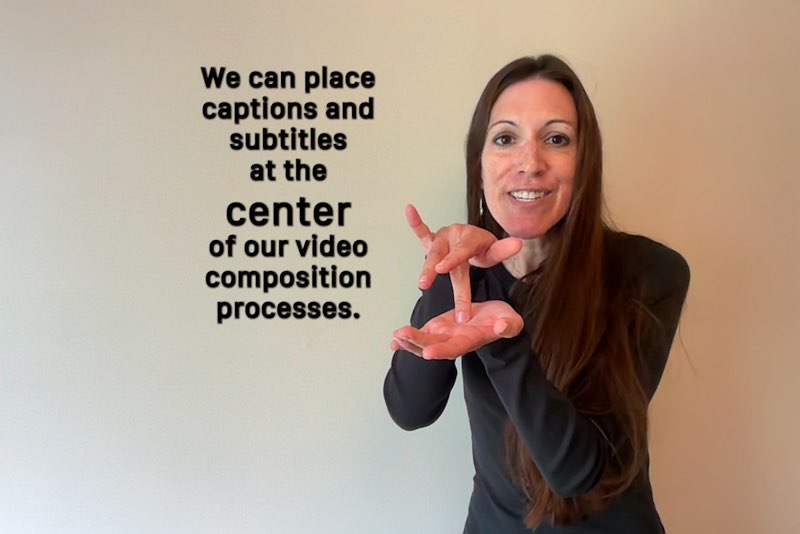
Figure 8.10: Placing captions and subtitles at the center
The central message here is: There is so much more that we can accomplish with and through words on screen, and so much more ahead of us when we open up even more spaces for connection. We can all continue visualizing captions and subtitles as the embodiment of accessible multimodal communication.